
Poursuivons la découverte de notre spécialité à travers le monde, cette fois-ci en direction de Madrid, à travers le témoignage de Gustavo Arrieta !
Can you present yourself in a few sentences ?
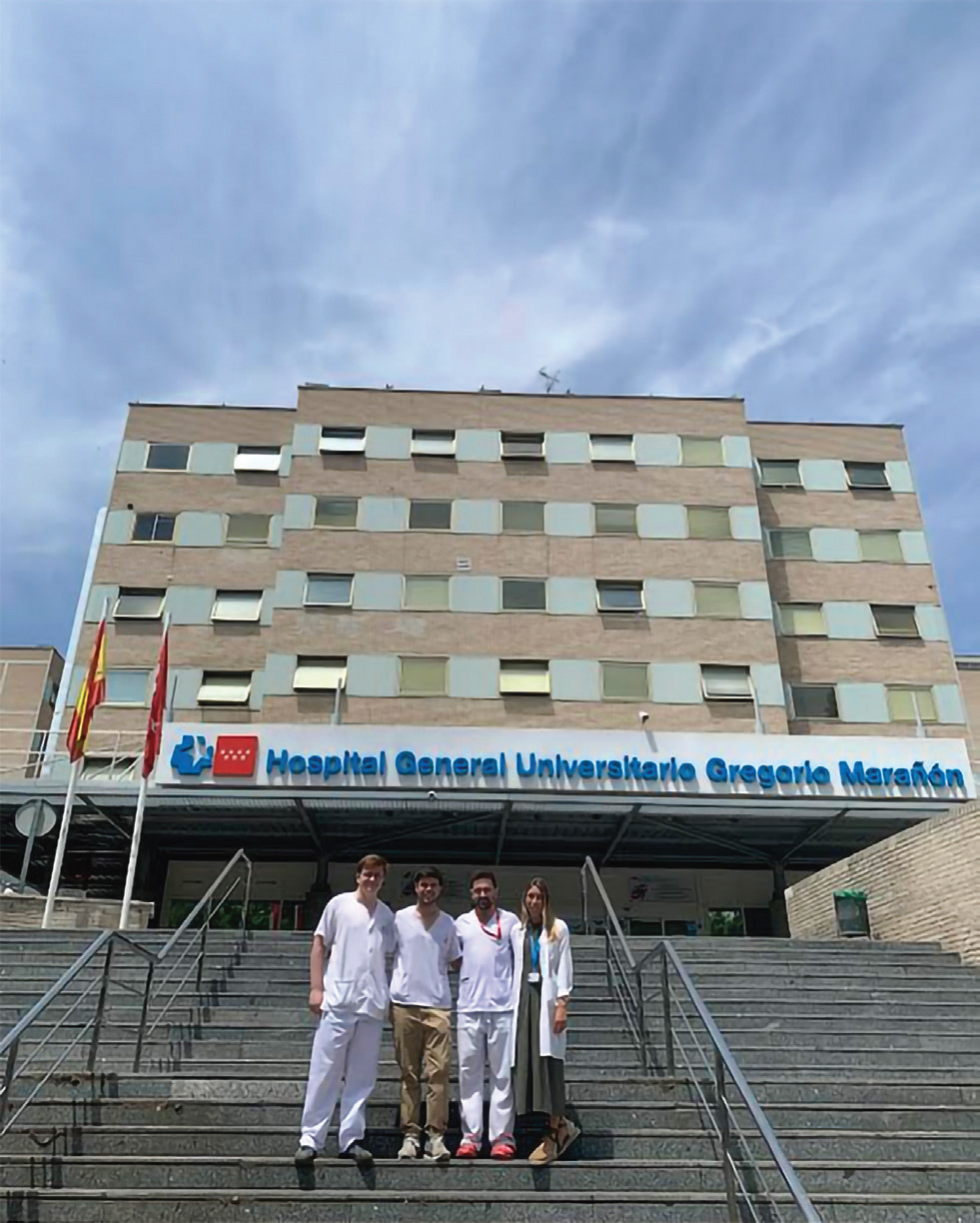
Hello, I am Gustavo Arrieta, I am 30 years old, and I am Spanish. I am currently in my first year working as a rehabilitation doctor at the Gregorio Marañón University Hospital, where I also specialized in PMR for 4 years.
On a personal level, I love doing different outdoor sports, going to the theatre or enjoying live music.
Why did you choose to work in this city ?
First, Madrid is the city where I was born, it is a big metropolis and, for this reason, it offers a great number of opportunities. You can find numerous job offers and combine them with numerous activities in your free time. You can enjoy museums, shows, parks, sports areas, trekking... That's incredible.
Madrid is home to internationally renowned hospitals, such as the Gregorio Marañón Hospital, where I studied and decided to do my specialist training. PMR is a very broad specialty and the Gregorio Marañón is a big hospital, with many patients where we can find all the subspecialties in rehabilitation with prestigious professionals and very up-to-date technology. In addition to our healthcare services, we also have a research unit to carry out research and development work.
Can you present Physical Medicine and Rehabilitation in Madrid? Is there many rehabilitation centers in Spain and can you describe them ?
In Spain, there are numerous rehabilitation centers in nearly every city, with Madrid offering some of the most options. The available services in Spain vary depending on the province. In Madrid, we can categorize them into two main groups. The first group would be made up of patients admitted to hospital, where the different pathologies can be assessed at the acute stage of admission and then referrals to medium or long-stay units can be assessed. These centers would be places where patients could be admitted for rehabilitation treatment or could be treated on an outpatient basis, but over a longer period of time.
The second modality would consist of the assessment of the patient in consultation in hospital outpatient clinics or in outpatient departments. In this case, we can assess different pathologies. In addition, depending on the Rehabilitation service, we have specialized units to be able to attend to the different needs of patients depending on their pathology (neurological, infant, cardiac...).
The idea is to be more and more accessible to the patient and to provide a better service. The assessment is carried out by a PMR specialist, who will indicate if the patient needs treatment, if an exercise program is prescribed to be carried out at home or if the patient can benefit from any interventional or diagnostic technique by the professional. The indicated treatment is prescribed and will be carried out by different colleagues (physiotherapists, speech therapists, occupational therapists or neuropsychologists among others) according to the diagnosed pathology. The idea is to work as a team, in a multidisciplinary way and thus, together, recover the limitations that the patient may present or prescribe different interventions with technical aids for greater functionality. I would highlight that in all public hospitals which have a rehabilitation service, the leader is going to be a rehabilitator doctor.
Can you present your daily work in your rehabilitation unit?
In Madrid, I start working at the hospital at 8 am until 15 pm. In my case, my practice usually consists mainly of musculoskeletal pathology. I usually start at 8:30 am examining patients, as I have an ultrasound scanner and equipment at my disposal to be able to perform different interventional techniques or to diagnose the pathology. The first thing I do is a detailed anamnesis, a clinical examination and if a more accurate diagnosis is required, I carry out an ultrasound assessment. Finally, I assess whether I need any complementary tests and if not, I adjust the treatment or perform an interventional technique.
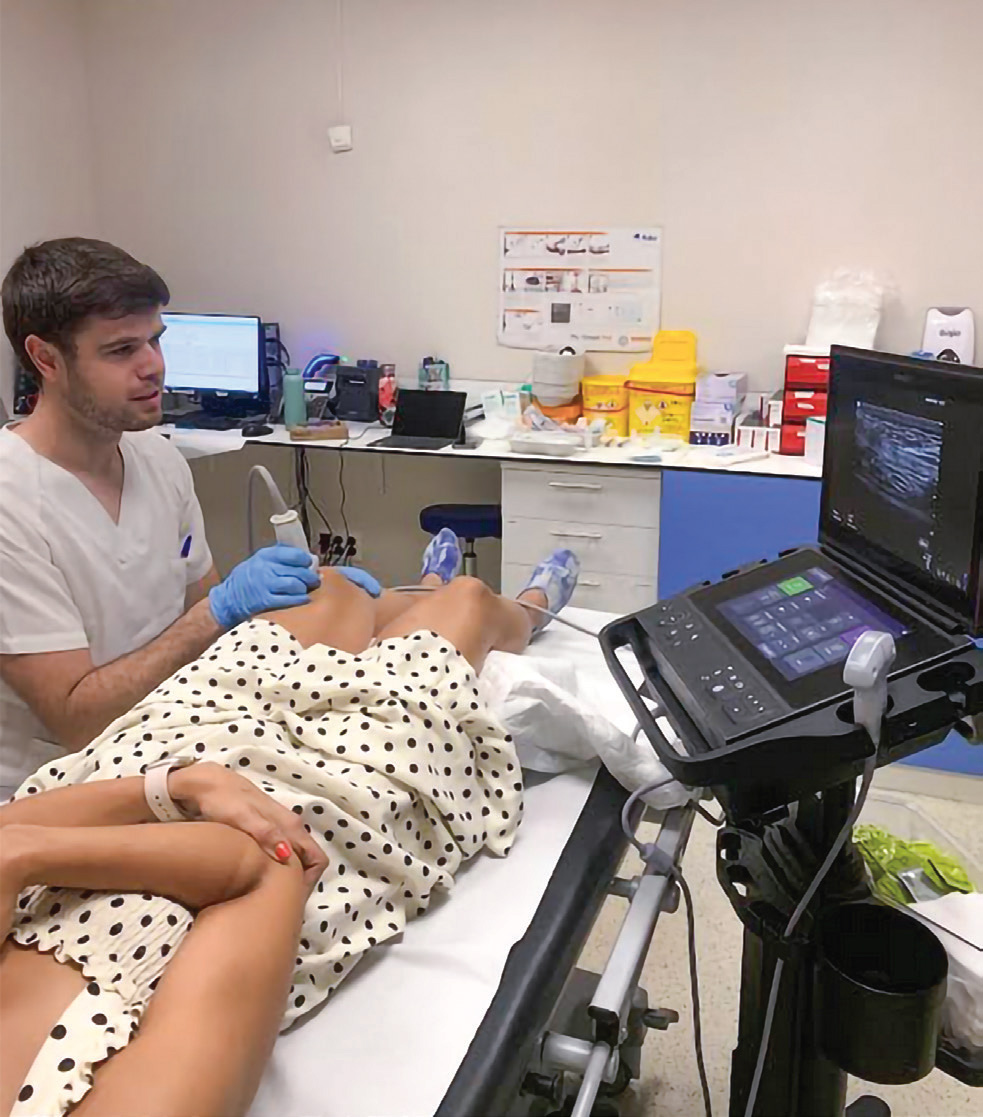
In consultation, our patients come referred by the primary care physician or after being evaluated by another specialist.
In complex cases involving a patient, the case is brought to a clinical session for discussion with colleagues to reach an accurate diagnosis and make appropriate treatment adjustments. We hold these sessions twice a week.
Once the consultation is over, we check whether a colleague from another specialty in the hospital has requested that we assess a patient who is admitted. Finally, in our service, we also hold clinical sessions, team meetings about some patients or bibliographic sessions at least twice a week.
Why did you choose Physical Medicine Rehabilitation as a medical specialty ?
I like this question. At first, when I sat the specialty exam, I wanted to do orthopedic surgery and traumatology. After taking the exam, seeing the number of choices I was assigned and the hospitals that remained (in principle I wanted to stay in Madrid), I decided to do PMR. My choice was based on the fact that the hospital where I had studied and where I liked (Gregorio Marañón) was on offer. This specialty was close to my first choice, offering the possibility of having dynamic consultations and being able to try to solve patient's problems on the spot or by giving early and accessible guidelines.
I was struck by the number of subspecialties and how we could help patients in a wide variety of ways. Also, I think we are covering a wider and wider fi eld and how the specialty is changing towards more precision.
Therefore, I could say that I am very happy and if I had to choose a specialty again today, I would not hesitate to choose PMR.
You are a member of the International Society of Physical and Rehabilitation Medicine (ISPRM). Can you explain why did you choose to be part of it and what it brings you in your work ?
ISPRM is a society with many members where you can meet people from other countries. Being able to participate and see how other professionals working in the same field as us work and share ideas, experiences and techniques from other places enriches us in our daily practice. I also belong to the Youth Forum, which is a group of young people who want to research and share our work with other researchers.
I think it can be a good opportunity to carry out multidisciplinary work, learn from other professionals and share it all in a more effective and accessible way.
This can help us to do external rotations in other hospitals to learn how we work in other countries.
Finally, do you have any anecdotes to share with us ? What are your plans for the future? How do you see yourself in ten years?
My plans are uncertain. On the one hand, I would like to continue training in musculoskeletal pathology and sports medicine, along with pain management; on the other hand, I would like to continue researching, as I believe there is still a long way to go to improve the quality of life of our patients.
In 10 years, I believe that our specialty will evolve a lot, especially when it comes to applying new treatments. In the past, rehabilitation physicians were prescribers of physiotherapy, and that has been changing in recent years. Nowadays, we diagnose and we can perform different treatments (interventionism, manipulations...). Today, a PMR physician often directs the stroke unit of a hospital, which was unthinkable before. This, added to the great advances in technology and the inclusion of more specific subspecialties, will greatly advance physical medicine and rehabilitation.
That is why I believe that, ten years from now, I will still want to be working, improving the lives of my patients, even if I am a little older!
Un grand merci Gustavo pour ce témoignage très intéressant sur une pratique de la MPR en Espagne. Si vous vous posez des questions et souhaitez en savoir plus, ou si vous souhaitez partager votre expérience à votre tour, n'hésitez pas à nous contacter à [email protected] !
Interview réalisée par Camille NOËL et Justine TREBUCQ