

Découvrez sans plus attendre ce pays à travers une interview avec le Docteur Uščinas, médecin MPR à Vilnius, la capitale.

Sveiki,
Could you present yourself briefly?
My name is Laimonas Uščinas and I have been a Physical Medicine and Rehabilitation (PM&R) Specialist for 3 years.
Please, tell us more about the studies?
Like in France, 6 years in Medical University are needed before being a resident. Then, the residency lasts for 5 years to become a PM&R doctor (it was 3 just a few years ago). Residents now spend more time in the various departments (neurology, cardiology, traumatology, paediatrics, and more recently sport and emergency medicine), and a month of US-scan theoretical training has been added. Approximately 2% over 500 students who graduate each year choose the Rehabilitation specialty. Almost the whole residency is spent into Academic Center Hospitals (les CHUs en France), but sometimes people can have an internship in a « Spa Center » (a private structure where patients can spend their rehabilitation). A considerable gap exists between the 6th year of medical school and the start of residency due to the limited practical experience beforehand. In addition, medical students have almost no experience with outpatients during their residency.
How is PM&R structured in Lithuania?
Public clinics are covered by the government and you need to follow public guidelines, whereas in Spa Centers the management is private and the practice is wider, including : acupuncture, yoga therapy, mesotherapy injection, etc. There are in and out patients in both structures.
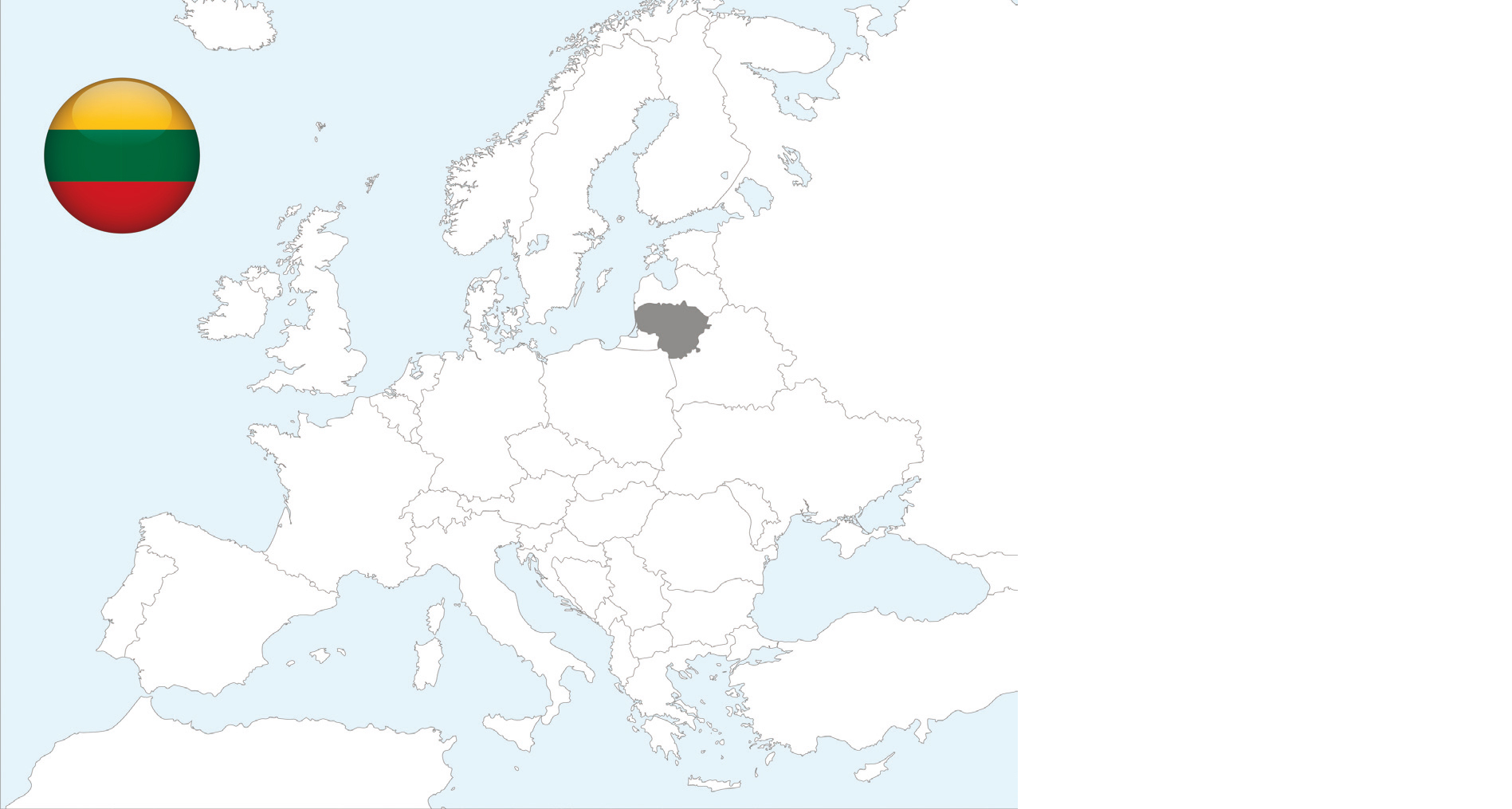
In Lithuania, patients get limited free rehabilitation days following severe conditions (public or private with agreement) : 3 weeks of inpatient rehabilitation are financed by the Health System after a stroke for instance, and it can be raised if justified. There is indeed a list of diseases and standard duration of stay in hospitalization.
If a patient is referred by his general practitioner or specialist, PM&R consultations and procedures are free of charge for the patient. Otherwise, it costs around 90€ for a consultation and you also need to pay for the procedures (physiotherapy, etc.). Massage therapy costs around one euro per minute, exercise therapy around 50€ per hour and TENS is around 15€ per session. Having health insurance is common in Lithuania, and it can cover part of these expenses.
PM&R doctors are not required to specialize in Neurological or Locomotor system rehabilitation, but medical centers and departments need the license for each type of rehabilitation (neurological, cardiological, etc) or population (paediatric, geriatric, etc).
There are three levels of rehabilitation in the country :
• Level 1 is for out-patients addressed to rehabilitation by family doctors, neurologists and cardiologists ;
• Level 2 is for patients recovering from a surgery, myocardial infarction, or complicated sepsis ;
• Level 3 is for those with acute stroke, spinal cord injury, or encephalitis.
As a doctor, you can also work independently as long as you get the appropriate license to start your own practice, but this is only marginal among PM&R doctors.
Another interesting fact is that PM&R specialists are commonly called « Rehabilitologists » by physiotherapists, patients and doctors.
Would you say that PM&R is well developed in Lithuania?
We have the post-soviet ideology that rehabilitation is very important. We have infrastructures like Spa Centers that are well expanded. PM&R is very well developed, as an older eastern country, but it feels like care provided is more designed to give the whole population a free access to usual rehabilitation with less interest in expensive new technologies. This access is guaranteed for almost everyone, everywhere in the country, and not only centralized into Academic Center Hospitals. We do not provide patients with robotic, virtual reality, or automatic assistance rehabilitation, but otherwise everything is available. There might be only one or two places in Lithuania with exoskeleton for instance.
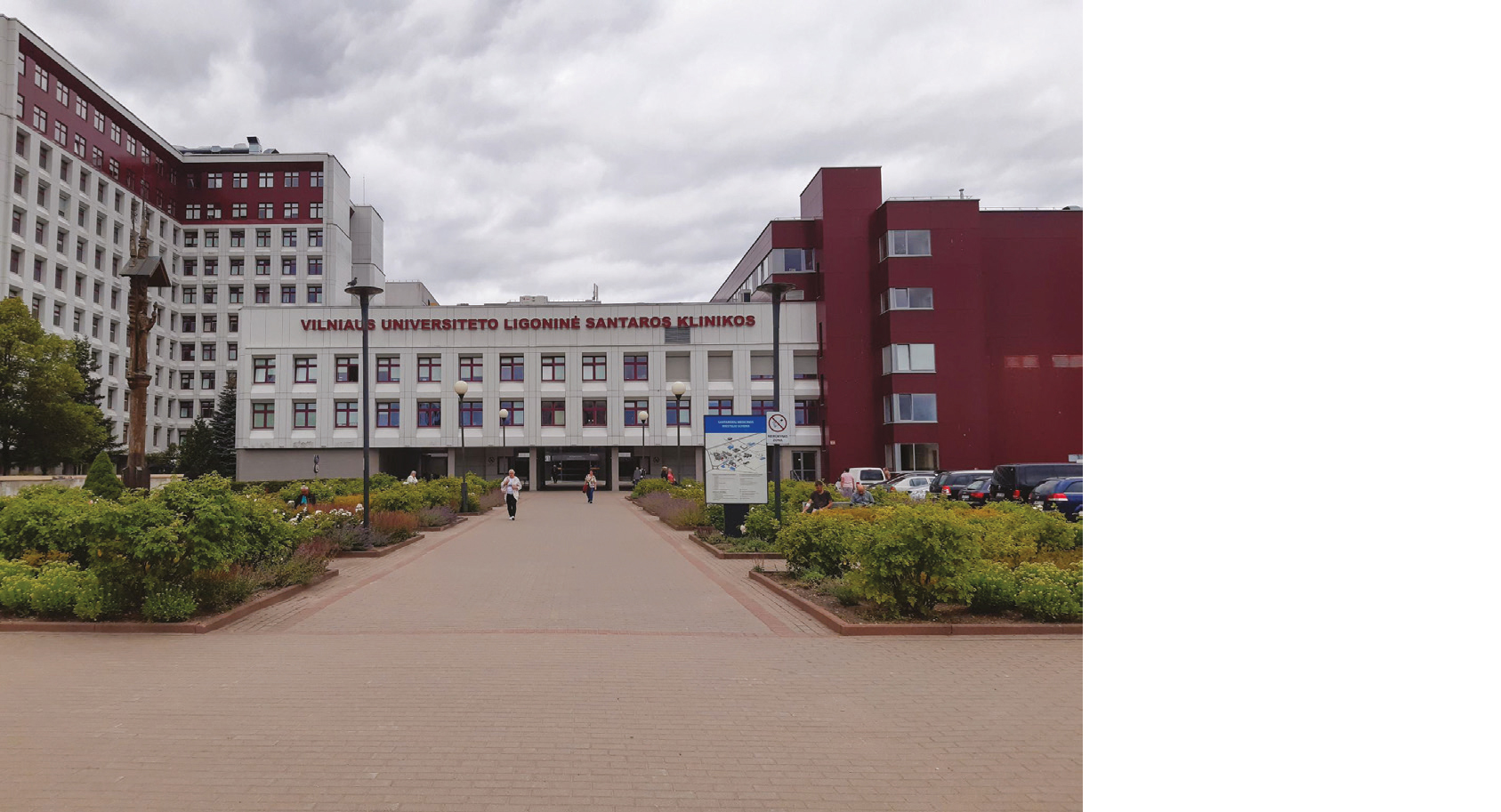
Vilniaus universiteto ligoninė, Santaros klinikos (Hopital universitaire de Vilnius)
What is covered by the residency training?
Toxin injections, US-scans (until recently) or intra-articular injections are not taught during the residency, so if you are willing to train yourself to these techniques, you need to find tutors and get a license outside of the residency that costs extra. We have a really good training on therapeutic management in neurology, cardiology, etc… but actually not that much for procedures that should be done by PM&R doctors.
How is rehabilitation depicted by the patients?
There is a common belief among the population saying that massage therapy is enough. Patients sometimes come to consultation only to get a massage and that is sad for PM&R specialists who struggle to make things change.
What about the nightshifts?
It is similar to France, during residency nightshifts are mutualized between different departments and sometimes only in rehabilitation ones. However, when you are a specialist you don't have nightshift unless you maintain your general practitioner license.
Could you tell us more about your own practice?
I work as a PM&R doctor in an independent Hospital for police officers, post-guards and firemen, but also two evenings per week in an outpatient Clinic. Soon, I hope to work in an inpatient Orthopedic Rehabilitation Department within a public Hospital.
Consultation time given by the government is around 15-20 minutes per patient but that is very short. However, in the private settings, I have 40-minute- long consultations to discuss the diagnosis, to perform a US scan if needed, to explain the prescriptions, etc.
What does a day at work look like?
Mornings are for the rounds with patients. There is also time dedicated to talk with the rehabilitation team (physiotherapist, occupational therapist, psychologist, etc.). There is a coffee break, of course. Part of the day is for out-patient consultations. Once a week, there is also a multidisciplinary meeting with other specialties to discuss patient cases.
Is the practice different between Vilnius and the rest of the country?
Around 550 000 people live in Vilnius and almost 100 000 of them are only speaking Russian. Thus, it is almost mandatory to speak Russian in the capital. In the rest of the country, people speak Lithuanian.
It is very easy to move from one place to another after you start working as a PM&R doctor because there is still a shortage of physicians. Additionally, Lithuania is well-known for its Spa Centers that attract people from Germany, Belarus, or United-Kingdom : there is an increasing demand for PM&R doctors.
What about the salary and vacation for PM&R doctors?
PM&R doctors who work into in-patient departments have approximately 3000€ before taxes so around 1500€ actual cash. It is more for out-patient practice (2000-3000€), and it depends a lot for Spa Centers (1500-4000€). Doctors have five weeks of vacation per year.
Any words for the French community?
Come to Vilnius, it is very peaceful and there is a lot of space. It is a very nice place to spend free time. Vilnius has a different vibe from the rest of the country, a huge part of the population is actually young and academic people, everyone is smiling and it feels safe.
Keep improving the new generation of rehabilitation because we might come and steal intervention !
Viso Gero!
Many thanks for your time and thoughtful responses during this interview !
Conducted by Landry DARLEY